Motivational Monday

[Arabian myth:] A horseman was riding across the desert at night, and as he went through a dried-up riverbed a voice out of the darkness commanded him to halt and dismount, which he did. Then the voice told him to fill his pockets with the pebbles at his feet, which he did. And then the voice told him to remount and ride on, which he did. As he rode out through the darkness, the voice said to him, ‘At sunrise you will be both sad and glad.” At sunrise he looked in his pockets and found that the pebbles he had picked up were diamonds, rubies, emeralds, sapphires, and pearls. He was very glad and very sad. He was very glad that he had taken as many as he had and he was very sad that he had not taken a lot more.

Sterling W. Sill

Today, in typical Monday fashion, I have great plans to make the best use of my time this week. I want to look back on the week, full of pebble-like tasks, and see that I am a little better than last week in my prayers; that I have learned a difficult section of a violin piece; that I have reached out to a handful of sisters in a meaningful way; and that I have eaten a little more quinoa and a lot less sugar. Mondays are so full of promise. Sunday will come, and my pockets won’t be as full as I hoped. However, Sundays are the day that I have the strongest reminder that it’s not about how many pebbles I collect; it’s who I am becoming with Christ’s help–and the difference I can make to others– as I use the hours I am given.

Lessons about Criticism

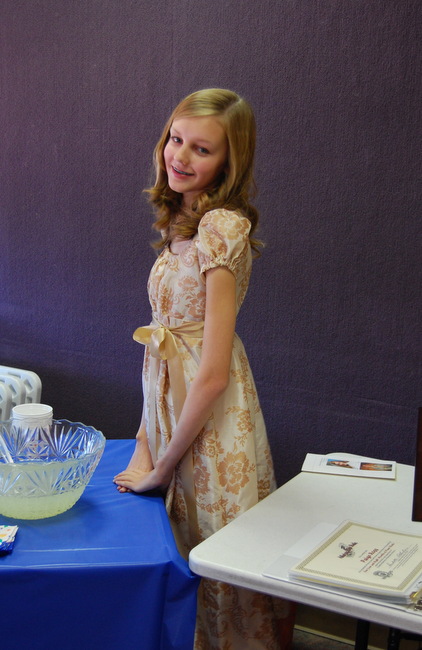
We were at the community library meeting room and we were celebrating a milestone for Paige and another boy who had just finished 8th grade in home school. Friends gathered to watch Paige play the piano and the boy sing. It was an exciting but vulnerable day for me, showing the efforts we had made in home education to the public. We invited friends and had cake and punch. Paige and the boy had each prepared an elaborate display of their school experiences and talents.

There were probably 25 people in attendance, and a guest approached me after the program during refreshments. She was in her late 60’s and introduced herself by saying her name and that she was a supporter of public school.

Okay, I thought. Here comes the conversation I had dreaded, the conversation that I feared would come in a public place. I had avoided most stores and restaurants with my children during school hours for 9 years so this wouldn’t happen. I knew that I was going to be accused of neglect or selfishness or coddling, by a stranger. I was literally backed up against a wall as she told me what she thought of home education.

She voiced her ideas. I responded in a calm way. We both came away from the conversation with something to think about. I was devastated by what she said to me, even if it wasn’t a new argument. I think it was just the wrong place for her to initiate such a conversation.

I felt numb for weeks after this. Her words hurt because she believed that I was “anti-community.” I had always believed that raising children and teaching them well was the best way to build a community. She didn’t know me. She didn’t know that I communicated with 70 families over a large area to see that our children were out of the house doing PE, academic activities, art classes, field trips, and service projects. She didn’t know that I was a volunteer science teacher and that we maintained a community pond. She didn’t know that I ran a Cub Scout program for children from any school background. Her words hurt because I was feeling vulnerable when she said them. Her words hurt because she voiced her concern to me in public. What should have been a celebratory day became one of the worst days of my life. It’s taken me many years to be able to write about it.

As we drove home from the event, the song, “Don’t Rain on My Parade” from Funny Girl came to my mind. It became my theme song when I dealt with criticism. I’ve played it many times over the years with the volume turned up high.

For eleven consecutive years I was an unconventional parent and home schooled my kids. Then I took a break and picked it up again for Mark in elementary school. It was okay with me if people disagree with my decisions. Through these years of being unconventional, I have learned that even when you disagree with someone, it’s possible offer untainted compliments and support.

People often told me horror stories about home school families or would begin a compliment about my child with the phrase, “I don’t agree with home schooling, but…” When this happened, it was hard for me to find the compliment clothed in criticism. I learned not to bring up home education to most people I knew. It was just too complicated.

To show support, some people offered to teach my kids a skill such as painting or foreign language, withholding any hint of disapproval. I took up anyone’s offer to help. I was very open to learning experiences outside the home. Some people would give simple compliments, such as, “Your son was polite to me today. Thank you for training him so well,” or, “I noticed you and your kids working on the community pond. Thank you.” I didn’t want them to tell me that home schooling was good or bad. I wanted to hear that my kids were good.

As much as I love compliments, I learned to function without the approval of others during those years. During this time of being unconventional, I learned that there is more than one way to raise a child well. I learned to respect different methods of teaching, raising children, and approaching a problem. I learned to trust the inspiration and direction from God that I received. Over the years I followed the thoughts that came to my mind that were not my own, including the phrase that came to my mind one day, “Send your children to public school this year,” followed by other specific instructions.

The lessons I learned during the home schooling years can’t be numbered, and the lesson about tolerance is an important one. I learned that it’s important to show respect and support for earnest efforts in parenting. I try to do this by focusing on positive things and giving pure compliments and encouragement, untainted by disapproval. If all I can say to a parent is, “I love your children,” that is enough. And if someone is having a celebration for an accomplishment or milestone, my goal is to never rain on someone’s parade.
Our voices are needed

image

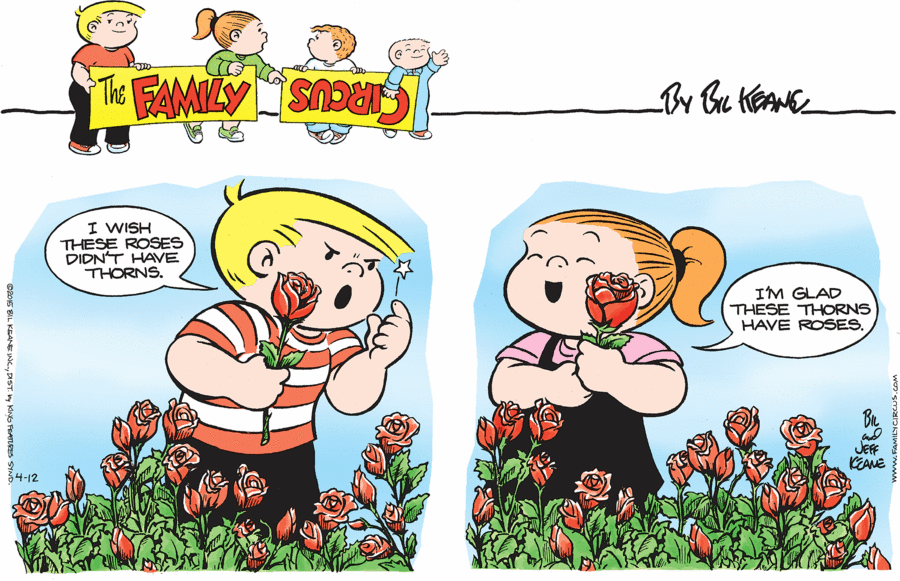
I shared this cartoon with my Relief Society sisters last night. I have seen over and over again how much our Priesthood leaders count on hearing the sisters’ perspective about issues; how sisters are needed in the complicated times of illnesses, births, weddings, deaths, and grieving, along with every day moments. Their voices are needed, not just to find pretty things, but to help with concrete, difficult issues.

The sisters in my congregation have been helping someone pack her house for a move. On Saturday our brothers carried the boxes we packed to the storage unit. It’s one of many examples of how we are all on the same team, doing the same work, but with different roles.

Sisters need their brothers’ perspectives and talents. Sometimes it’s the bishop who sees the roses when all I can find are thorns. More important than that, I am comforted to know that the bishop holds the priesthood keys to direct the Relief Society. His voice is essential to the work, but it doesn’t diminish my role. I counsel with the bishop and then we both work for a common goal. In my marriage, I depend on Richard to help me see situations with greater clarity. We have different jobs and ways of doing things, but the same work. And it’s a great work, requiring each person’s voice, heart, mind, and strengths.

Little Drummer Boy

Daniel, at age 9 was invited to sing The Little Drummer Boy at a big community Christmas show at the high school auditorium in Sahuarita, Arizona. The show featured dance numbers from Paige’s dance studio and choral and instrumental performances of Christmas music between the dances. Daniel’s number was unique because he would be singing while some 3-year-olds danced with drums.

He prepared well and was serious about the opportunity to sing in front of the town. Richard and I sat on the second row so we could film his singing and Paige’s dances. Daniel had been to all of the rehearsals, including the dress rehearsal with the little girls in red and white tutus that were as wide as they were tall. However, we couldn’t have predicted what the audience of 1000 people would do when they saw these girls enter the stage in those sickly-cute tutus and overly-curled hair.

Daniel sang at the corner of the stage and the girls marched out with their red sequined drums. Audience members erupted into small chuckles and shared comments about how cute the girls were with their neighbors. Daniel sang on, despite the growing din in the auditorium. Then one little dancer decided to go rogue. She sat down and refused to stand up with her drum, which caused a comic scene on stage with at least one dancer getting angry with the non-conformist. A drum was kicked across stage. The audience, already noisy, cackled with laughter and talk. Daniel, wide-eyed and determined, continued to sing in what must have been a most baffling and difficult circumstance. How could he hear the music over all the noise? He sang perfectly, but looked bewildered. He took a bow at the end, eyes shifting uncomfortably across the laughing crowd. I hoped he didn’t think they were laughing at him.

I felt sick. My disappointment for Daniel and anger at the audience’s rudeness made my stomach tight. My inability to predict that Daniel would be singing over raucous comments and rowdy laughter and save him from it was a new kind of trial for me. I still can’t hear this song without remembering the horrible behavior of the audience that night. But Daniel was magnificent.

Betty Burns

Betty Burns, 2003-05

While we were living in Texas, we adopted local aunts, uncles, and grandparents for our children. One of our favorite adopted grandmothers was Betty Burns. Our friendship began when she was assigned to visit me every month as a visiting teacher. She will always be one of my favorites. She came every month and taught me the gospel and loved our children.

Betty lived in a small apartment and had limited means, but she lived with generosity. She joined our family activities naturally, coming to dinners, lunches, and a road trip. If the kids were a little grumpy, she was there to diffuse the situation with a grandmotherly laugh which taught me not to react in a negative way.

Paige invited Betty to her 8th birthday dinner. We have a video of Betty as Paige opened her handmade gift, an apron with ballerinas printed on the fabric. Baby Timothy pelted her with a balloon and she just laughed at the little boy’s painless attacks.

Baptisms and baby blessings can be lonely when you live far from family and they can’t make the trip to attend. Along with my parents and Rob’s family, Betty and a few other friends came to Paige’s baptism. I felt overwhelmed by support. Betty’s attendance at the baptism sealed her adoption in my heart, along with the other friends who were there.

One January day she invited the kids and me to her apartment to see her decorations. She had been sick during December and hadn’t been able to decorate her house for Christmas, so she decided to do it in January instead. We walked in to a cozy scene with nativities of many kinds everywhere. The festive decorations trailed all the way through her apartment, not just in her living room. She told us stories of where her nativities were purchased and let the kids touch them. I realized that this wasn’t just a casual visit: we were her special guests, invited to celebrate Christmas with her. She presented me with a large box and we opened it to find a beautiful porcelain and gold Nativity from Dillard’s inside. This nativity has a place in our home each year.

Betty was my ally. She cheered me on in my efforts at church and with our children. I have kept all of her notes to me during those years. They are full of encouragement, clothed in thanks. I was in my late twenties and she was in her seventies, and she could move among the roles of mentor and elder to friend and confidant. I needed this nurturing at this time in my life, especially because I was serving as the Relief Society president and had a responsibility to nurture many people in our church congregation. I think she needed our children, and our children needed her. One of their favorite memories of Betty was when Richard took the kids to her apartment to fix her computer. She fed them ice cream at dinnertime, as any good grandmother does.

What did I learn from Betty? I learned generosity in friendship and faithfulness in visiting teaching. I learned that generosity needn’t spring from a healthy bank account. She showed me in endless ways that she cared. I learned that generations need each other. With her laugh and attention to our kids, she influenced me to view them in a more precious way, not being so hasty to correct them. I learned that the important relationship with grandparents can be filled by someone who isn’t related to us.

Thank you, dear Betty.

Winter sights

image

image

image

Snow continues to fall often. Mark’s art on the refrigerator keeps things cheery in the house. When the sun comes out we have dazzling light, reflected off the snow, stream through the house. Today is one of those dazzling days.

Every few days I get a call about someone else that has been hospitalized. Winter has been hard on this neighborhood and my congregation. I feel grateful for health and strength to help, and see real service being rendered by so many people. It is so humbling to have a front row seat to goodness.