Things that helped

After reading through my 2023 blog posts, I’ve decided that I want to end the year by listing one daily, one weekly, and one monthly thing that helped me get through a year which was actually very challenging.

A daily practice that helped:

  • I took the counsel of President Nelson and I kept a journal of impressions that I had while I prayed, and I acted upon those impressions. This created a leap in progress in my understanding of how revelation works and how interested God is in my life.

A weekly practice that helped:

  • Friday dates with Richard

A monthly practice that helped:

  • I tried to do a variety of work in the temple. Richard and I were able to complete temple ordinances for several ancestors with the help of our children, my brother, and my parents.

I have also looked over my reading list from 2023 to see where I have been. I have a special shout-out for Charles Dickins’ David Copperfield and Annie Dillard’s Pilgrim at Tinker Creek.

As I prepare for 2024, I don’t have any major resolutions. I do have plans to keep my good habits, while giving myself the grace to just do one thing at a time, including new things.

Wishing you a gentle look back at your 2023, and a hopeful look forward to your New Year.

Love,

A.

Sharing faith online

I am trying to be more mindful of what I write online. My blog posts are going through a more rigorous editing process, with most posts simmering for days before I hit, “Publish.”

My religious posts have the most revisions because I want to share uplifting things well.

I understand that not everyone wants to read about church or God. I post religious content on my blog because I know that readers are here by choice. But occasionally, I post something religious on social media.

In May, I shared on social media a talk given by a general authority because it had been helpful to me. A friend left a comment explaining that the talk was hurtful. Both of us took time to communicate about the post in a respectful way. I love my friend, and I told him that his opinions won’t change that.

I was pretty sad that my friend found pain in something that has inspired me. I questioned whether I should have shared the talk, even though it was from a worthy source. I questioned my motives, weighing the pride behind my post against my good intentions. As I thought and prayed about this, I realized many things, and I want to share a few of those things here.

First, personal choices, experiences, and culture influence how people see the same things so differently, but religion is not inherently hurtful. The things that cause discomfort often indicate something we need to face about ourselves. I learned through this uncomfortable experience that pointing someone to the Source of truth is better than establishing truth or proving a point.

Second, there are poor, good, better, and best ways of sharing faith. I acted hastily, as I do sometimes, when I am trying to gain the courage to share. If I had paused, I might have been instructed by the Spirit to share the content differently. Still, God can work with my imperfect efforts. My post led someone to listen to something new. Who knows how this experience will affect my friend’s life moving forward. I hope something positive will come from this, even if it’s just knowing that I still care.

Third, the goal can’t be to please everyone. The goal is to be a light. I want to be a gentle, steady light, not a spotlight focused on myself, and never an interrogation lamp to accuse.

In 1834, the Lord gave some instructions about the Latter-day Saints’ behavior and words in the midst of opposition. While I don’t face the same level of opposition, I think that this is a good personal guide for expressing faith:

Be very faithful and prayerful, and humble before me…reveal [share] not the things that I have revealed…until it is wisdom in me.

Talk not of judgments, neither boast of great faith nor of mighty works…

And behold, I will give unto you favor and grace in their eyes, that you may rest in peace and safety.

Doctrine and Covenants 105:23-25

So, I gather my scattered courage, friends, as I keep trying to shine a light. Sending courageous wishes to you as you do the same. The Lord is working with us.

And they went forth, and preached every where, the Lord working with them, and confirming the word with signs following.

Mark 16:20

Rest

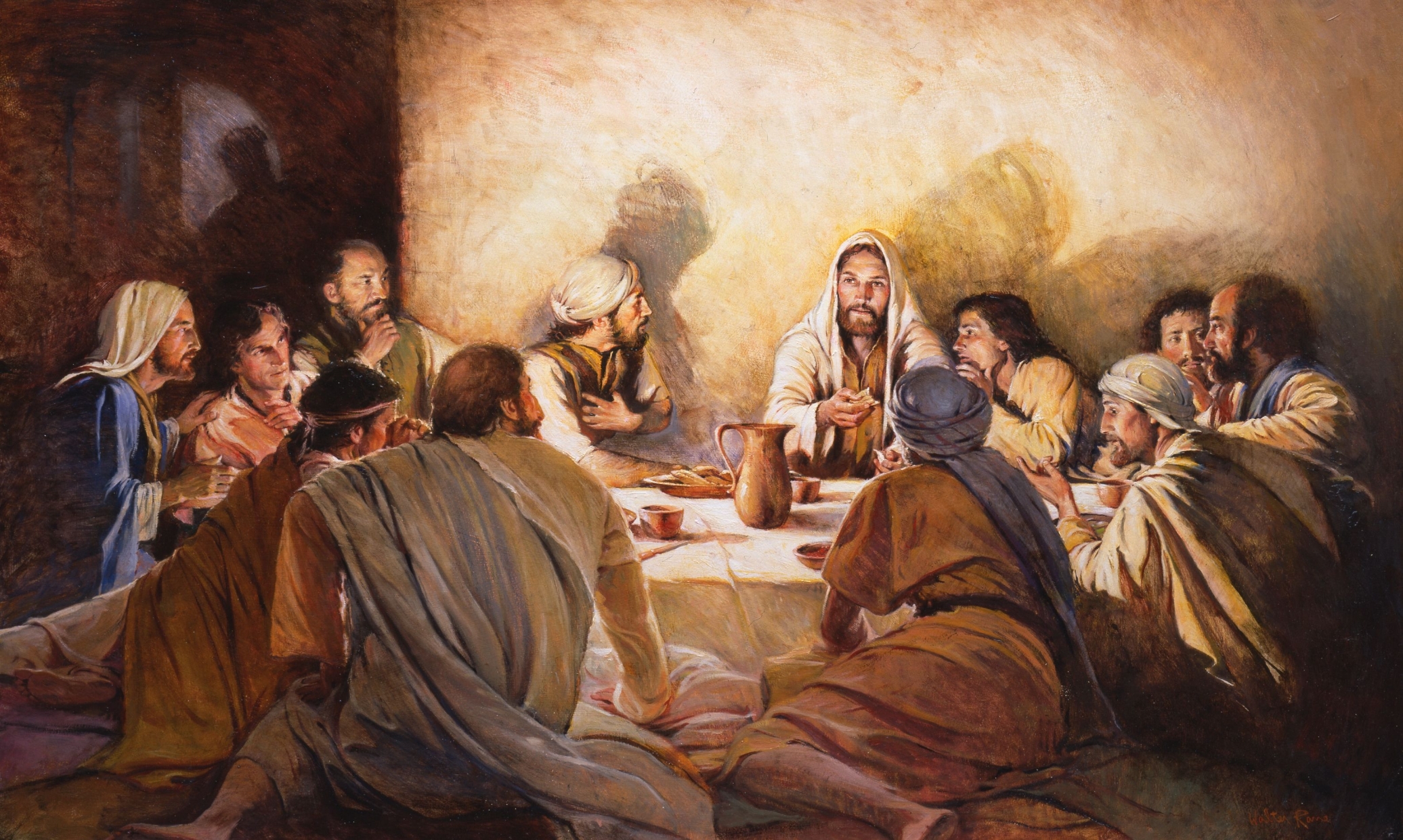
Painting By Walter Rane

In my Father’s house are many mansions:…I go to prepare a place for you.

John 14:2

Recently, I learned the original Greek word, monai, which became a Latinized version of mansions in this passage, actually means stopping places or resting stations. So, the original passage would be something like, In my Father’s house are many stopping places or resting stations, “thus giving the impression of a long journey rather than a large estate.”*

This makes me think of the mission of Jesus Christ in a new way. He prepares places to rest, not just at the end of our journey, but every day. These resting stations allow us to continue on the journey after a brief pause to be strengthened or encouraged, forgiven, and healed.

We need stopping places where we can have our injuries dressed and find the comfort of a Healer.

Come unto me, all ye that labour and are heavy laden, and I will give you rest. Take my yoke upon you, and learn of me; for I am meek and lowly in heart: and ye shall find rest unto your souls. For my yoke is easy, and my burden is light.

Matthew 11:28-30

Every day, we need a stopping place to repent, and an ideal to follow.

Listen to him who is the advocate with the Father, who is pleading your cause before him—

Saying: Father, behold the sufferings and death of him who did no sin, in whom thou wast well pleased; behold the blood of thy Son which was shed, the blood of him whom thou gavest that thyself might be glorified;

Wherefore, Father, spare these my brethren that believe on my name, that they may come unto me and have everlasting life.

Doctrine and Covenants 45:3-5

Every day, we need a resting station to receive encouragement.

These things I have spoken unto you, that in me ye might have peace. In the world ye shall have tribulation: but be of good cheer; I have overcome the world.

John 16:33

Where, then, are these resting stations in our lives? Perhaps some physical places come to mind, and maybe some less tangible things, such as behaviors or blessings can be “places” of rest. Whatever the image of rest, I know that the Savior’s understanding, power, and presence are involved.


*Concepts and quote about the Greek translation are from C. Wilfred Griggs, “The Last Supper According to John,” From the Last Supper through the Resurrection: The Savior’s Final Hours, ed. Richard Nietzel Holzapfel and Thomas Wayment, p. 116.

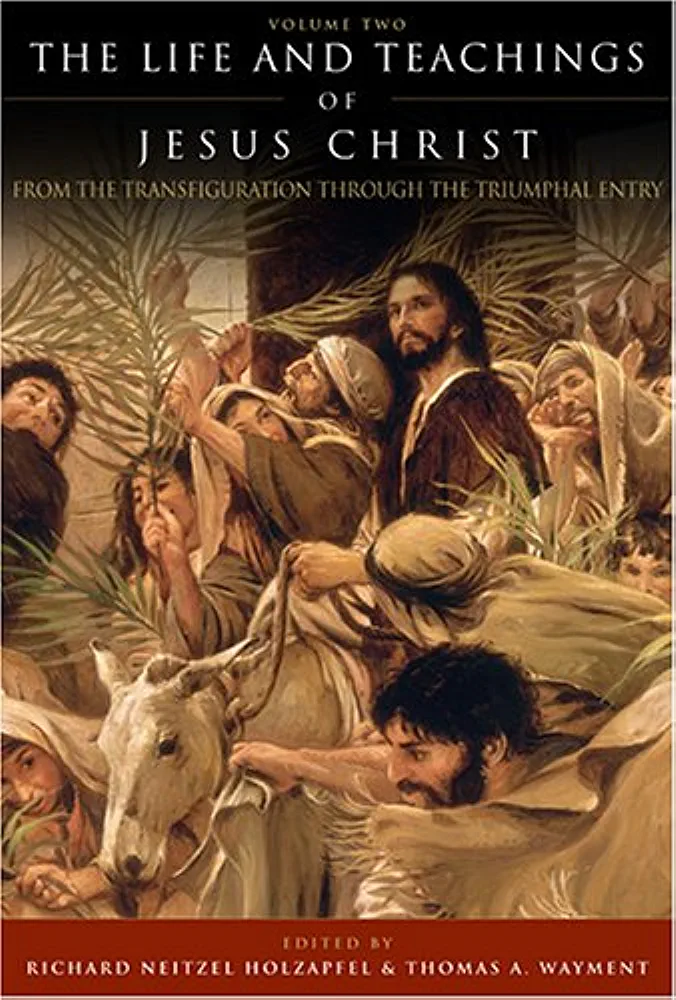
A book for the desk and a book for the nightstand

This is volume 2. I am working on volume 3, and have loved each one.

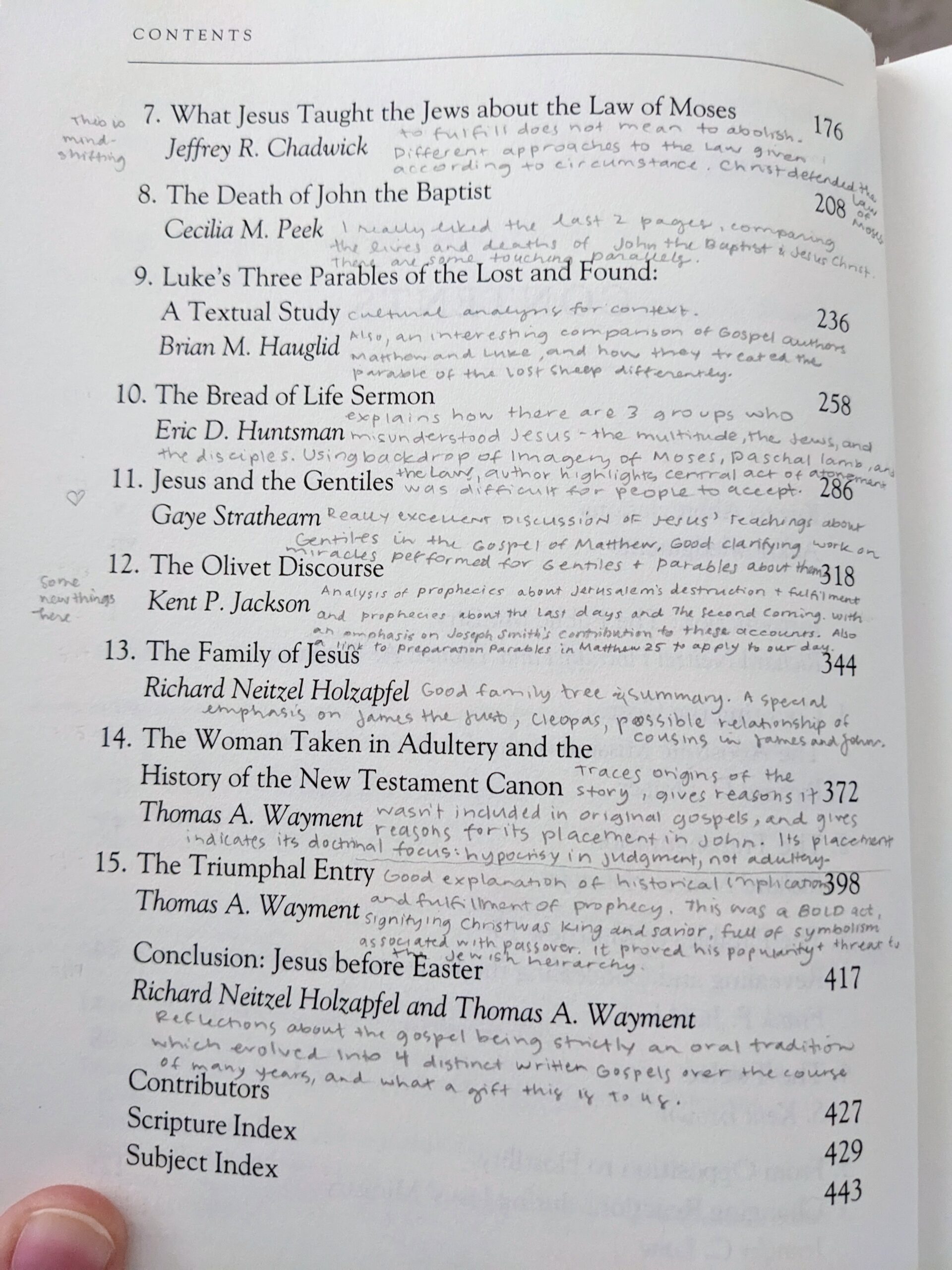
My books from this New Testament series are so full of personal marginalia that they are probably ruined for anyone else’s use.

I like to leave helpful notes to my future self in the Table of Contents and throughout the book.

I like having different kinds of books in different places in the house, and save lighter reading for the bedside table. Light fiction at bedtime is a wonderful idea.

My current light reading? 😂

I had forgotten how funny this book is. I laugh every day.

Know as I am Known

I read about a group of blind patients who received an experimental surgical procedure to have their sight restored. The results were the gift of vision, which you would think would be positive. Yet, the longer a patient had been blind, the less likely they were to be initially happy with the sudden ability to see. Distances, physical features, complexity of patterns, and relative heights were not anything like they imagined before they could see. One patient kept their eyes closed for days, as everything seemed like too much to process. Another was driven to insanity. One begged to have a reversal of the operation so they could experience things the old way once again. Children were much more open to a change in vision and lifestyle. They weren’t as burdened with habits and perceptions that stood in the way of a new life.

This story made me understand that it is a gift not to know all things just yet.

To me, the concept of faith is a gift. We are here to act according to our best and purest beliefs, without absolute knowledge. We get to live freely and fully, and as unencumbered as faith in Jesus Christ can make us.

Another gift is that we arrive gradually at stunning truths and principles that will require a lot from us. We have time to figure things out, and have the luxury to fail and try again. We build our capacity for knowledge as we do simple things day after day, week after week, year after year. Sometimes faith requires us to make a “leap,” but more often, it requires small, routine steps. When my personal faith feels shaky, it is usually because the little faithful acts aren’t being done, or they are being done without humility.

So, what is my reaction when smacked by something from church that doesn’t match my ideas of just or right or true? Can I curb the impulse to form fists, dig in heels, and let indignation grow? Can I summon the faith of a child during times when I need to show humility, not defiance?

I want my journey of faith to be like throwing off the blindfold and walking towards the blinding light of difficulty, and facing the challenges to my own way of thinking. I don’t want to shrink, abandoning the Way for my own path. In forty years of Church membership, I have navigated lots of things that prove that “[Our] thoughts are not [God’s] thoughts.” (Isaiah 55:8)

I chose the path of God’s mercy and grace when I was baptized, and it has been a blessing to live in a covenant relationship with Him. I want to be one who keeps looking at something until I can comprehend it. I know that I “see through a glass darkly,” but I “shall know, as also I am known.” (1 Corinthians 13:12)

Faith leads to knowledge. Knowledge of what? All things. God himself.

67 And if your eye be single to my glory, your whole bodies shall be filled with light, and there shall be no darkness in you; and that body which is filled with light comprehendeth all things.

68 Therefore, sanctify yourselves that your minds become single to God, and the days will come that you shall see him; for he will unveil his face unto you, and it shall be in his own time, and in his own way, and according to his own will.

Doctrine and Covenants 88:67-68

Thinking is work

So wrapped up in my thoughts, I misread the clock yesterday and made dinner very early. With my extra evening hours, I redecorated the shelves to embrace February, ready or not.

It is ward conference season and I am thinking a lot about my stake speaking assignments and ministering to very different needs among the wards. I am thinking about Paige and Michael’s move, and I am on the hunt for all the places I can display Paige’s art. Thinking is work. Writing talks and lesson plans is work. Planning is work, and so is settling into a new reality. When I accomplish something tangible, like cleaning out a closet or desk, I call it a nice break from the more arduous and intangible work going on within. Thinking is work.

Chasing sunlight

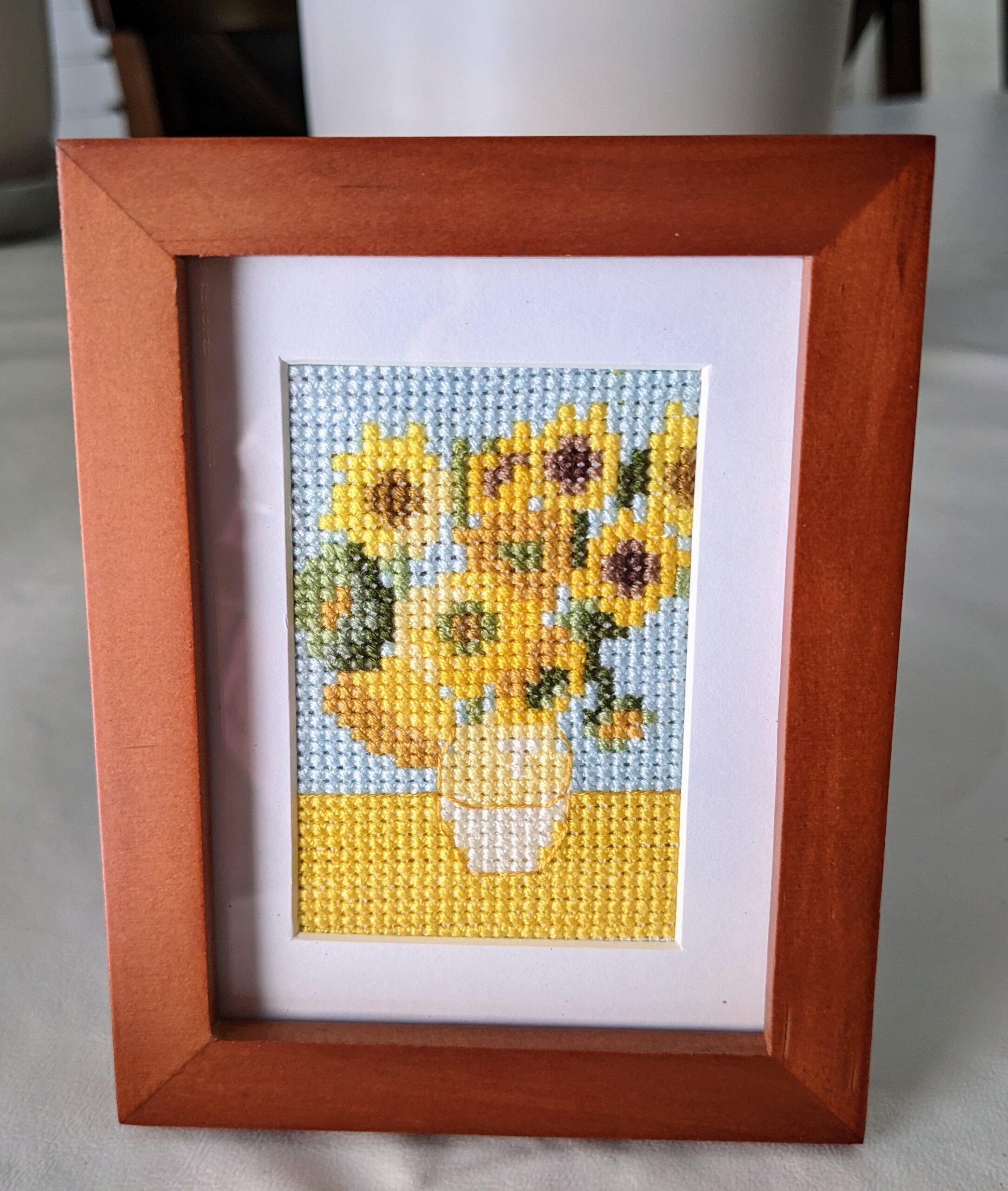
We had some dreary days this week, again. I chased sunlight by working with gold and yellow thread and spending an afternoon with a friend.

I chased it by reading a novel by Amor Towels, a favorite author.

I chased it by listening to a new piece of classical music every day. (See the book, Year of Wonder by Clemency Burton-Hill.)

I found sunlight as I wrote out a story from my dad’s life.

I found it as I studied about the mission of John the Baptist. (See The Life and Teachings of Jesus Christ From Bethlehem to the Sermon on the Mount, edited by Richard Neitzel Holzapfel and Thomas Wayment.)

This week, rather than put away the Christmas cards, I hung them on an empty wall in my kitchen where they will stay. The faces on the cards feel like sunlight to me.

William Tyndale, Revisited

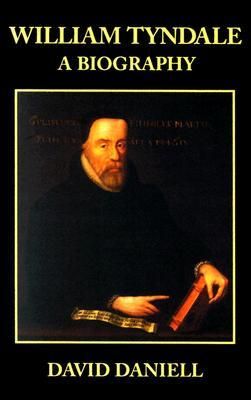
About 15 years ago, I began reading this book, and I filled its pages with post-it notes because I found it so interesting. My days were focused on homeschool and babies, and I couldn’t finish it before it was due at the library. Defeated, I pulled the post-it notes from the pages so I could return it, and I made a promise that I would pick it up again when I had more time to devote to such a scholarly work. Well, I remembered my promise and finished it.

There are other books that might tell the story of William Tyndale in a simpler way. This was academic, sometimes over-detailed, and occasionally beyond my understanding.

William Tyndale is one of my heroes. He was the first person to translate the Bible into readable, understandable English from the original Greek and Hebrew. He was condemned as a heretic and killed before he could finish his translation of the Old Testament. Thankfully, his New Testament and Pentateuch were used in the King James Version of the Bible after his martyrdom.

I liked the author’s focus on Tyndale’s value as a translator, comparing many more muddled translations to Tyndale’s direct, clear sentences. Tyndale contributed a lot to the English language, its cadence, sentence structure, and vocabulary. Beautifully and heroically, Tyndale made the Bible understandable, and its sentences memorable. He created important words and phrases such as scapegoat, Jehovah, and living water.

Take a look at the Bible, and you will see that most sentences are constructed with monosyllables, with multisyllable words at the end of the sentences for emphasis. This is Tyndale’s voice. His words sing in our minds. These are his words, and the King James Version follows them very closely.

And after the fire, came a small, still voice.

Why halt ye between two opinions?

Blessed are the pure in heart, for they shall see God.

So the last shall be first, and the first shall be last. For many are called, and few be chosen.

And Jacob served seven years for Rahel, and they seemed unto him but a few days, for the love he had to her.

Tush, ye shall not die.

He believed the Bible should be read by anyone, and the gospel defined by the whole book, not isolated phrases, or worse, commentaries. As he worked over many years on the New and Old Testaments, he came to understand the gospel in terms of a covenant relationship with God, requiring faith and action. He learned for himself the value of the word of God, taken in its entirety, to understand what God expects of us.

What he did took great skill. He knew 8 languages. What he did took great courage. He lived in hiding in a foreign land for years. You may have heard his quote to a learned man,

If God spare my life, ere many years I will cause a boy that driveth the plough shall know more of the Scripture than thou dost.

Moving beyond the book, I think about Tyndale’s influence on the plowboy, Joseph Smith, who translated the Book of Mormon. Joseph didn’t have an Oxford education like Tyndale. He had no experience in ancient languages, but with the inspiration of God and a mind full of Biblical phrases (influenced by Tyndale), he translated the Book of Mormon in a very short period of time. As for the words from James 1:5-6 that inspired Joseph the plowboy to go the woods to pray, many are Tyndale’s.