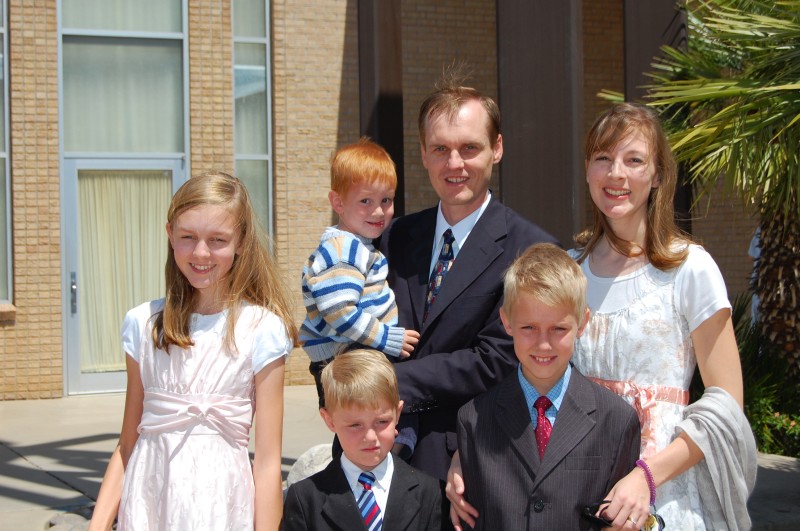
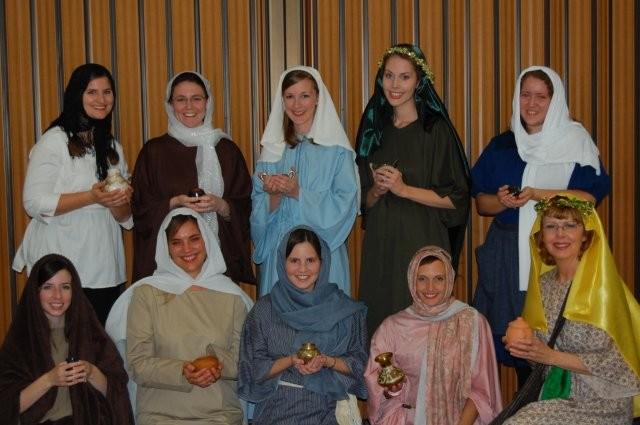
We celebrated completing the Book of Mormon as a family November 2008
I’m not listing our top 5 educational resources in any particular order, but if I were, the Scriptures would be the most important.
This post has been hard for me to pull together in my mind because I don’t want to come across as sounding preachy or self righteous. So, I will just share a few of my favorite quotes from our church leaders to give you “the vision” or the goal behind our scripture study and memorization and then I will tell you about our daily devotional.
“It is desirable that our children should learn to memorize important passages; such that will leave a strong impression upon their lives; scriptural passages that they will use as their guiding star; scriptural passages that will help to form convictions in their minds of right and wrong; scriptural passages that will bring conviction to their hearts.” (Elder Joseph M Tanner, April 1901 General Conference)
“In the future, infrequent family scripture study may be inadequate to arm our children with the virtue necessary to withstand the moral decay of the environment in which they will live. Where in the world will the children learn chastity, integrity, honesty, and basic human decency if not at home?
“These values will, of course, be reinforced at church, but parental teaching is more constant. In my opinion, the teaching, rearing, and training of children requires more intelligence, intuitive understanding, humility, strength, wisdom, spirituality, perseverance, and hard work than any other challenge we might have in life. This is especially so when moral foundations of honor an decency are eroding around us. To have successful homes, values must be taught, and there must be rules, there must be standards, and there must be absolutes.” (James E. Faust, “The Greatest Challenge in the World- Good Parenting, Ensign, Nov 1990, p.33)
So, this is what we do. It’s not always perfect, but we try.
- Scripture study at our house begins at 9:00 a.m.
- It takes about 15 minutes. We read from the Book of Mormon, the Bible, and the Doctrine and Covenants. Right now our family is reading the Doctrine and Covenants.
- After we read, we pray.
- Then we sing scripture songs (I make up tunes to scripture verses and we sing to learn the verses) This week we are learning Ephesians 4:11-14.
- We sing a patriotic song
- We say the Pledge of Allegiance
- We each pick a name of a family member out of a box and we try to be a good Samaritan to that person all day.
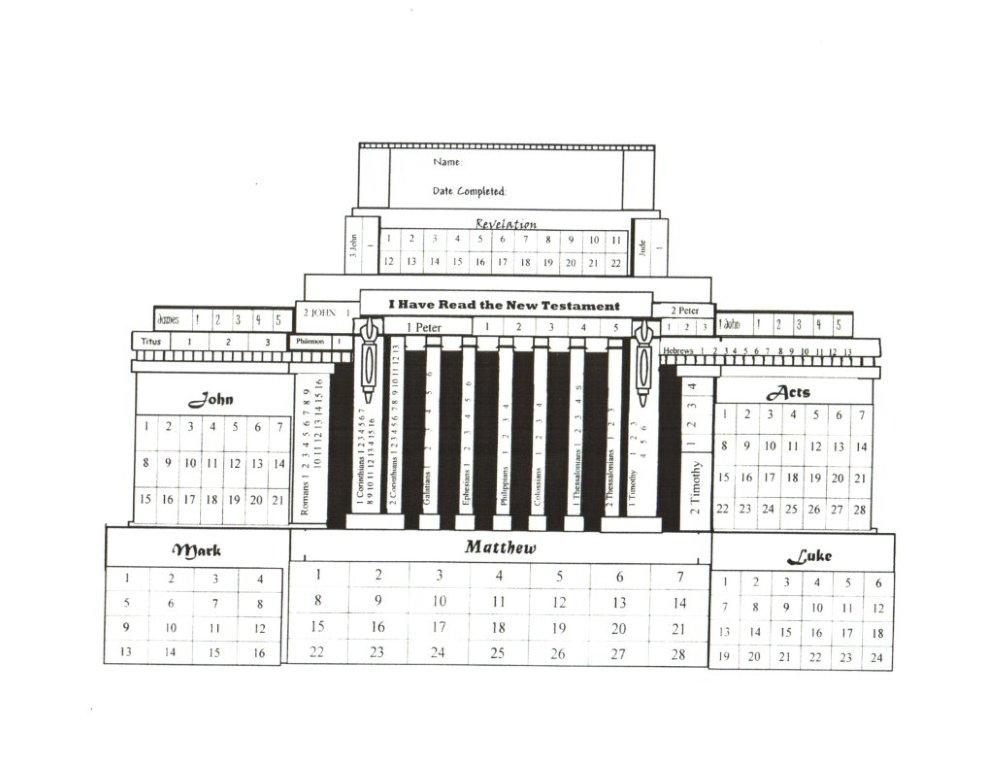
- The kids have personal scripture study during the day as part of their homework. I give them charts to fill in to show their progress. Here is a chart I made to color as we read the New Testament.
Pretty basic stuff, but scripture study really works to glue our family together in faith.