Tribute to Teachers Week: Tuesday


Tuesday means art and pond work for our family. We have two teachers on Tuesdays, Sister Alyce Jones and Mrs. Rebecca Costello.

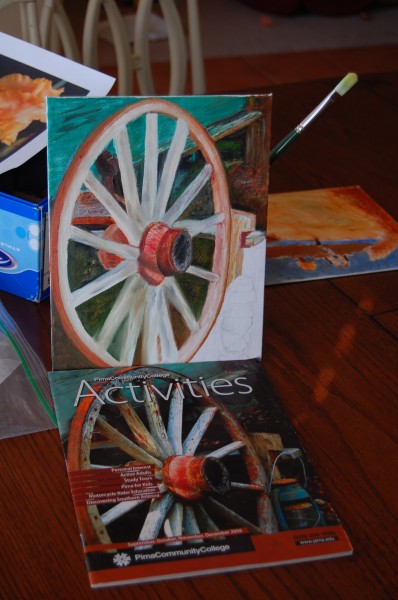
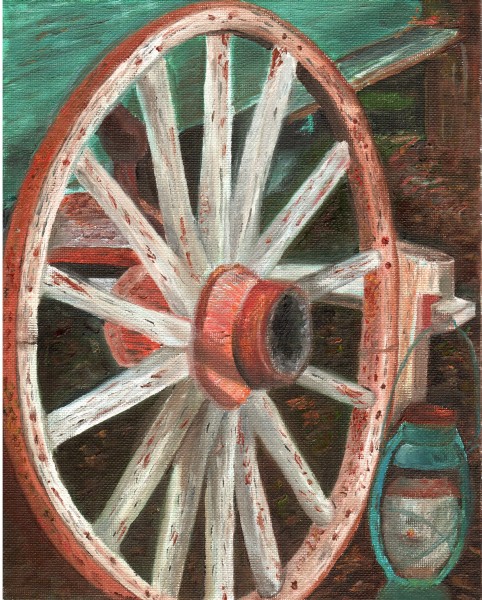
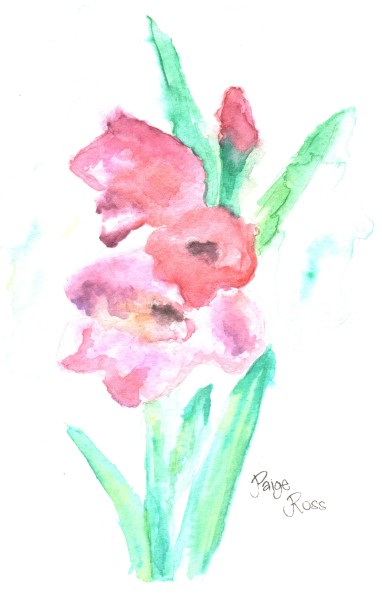
Alyce Jones has taught the kids to paint with oils and watercolors since June of 2008. We meet with her every few weeks on Tuesday afternoons. We like her approach to art teaching. She gives a few instructions and then encourages the kids to explore the art of painting. She has a huge art library in her home and she’s allowed the kids to borrow probably 20 books and several videos to help them. That reminds me, I need to return some of her best brushes that she loaned to Paige. She is like a grandmother to the kids, bringing them gum, sharing her cookies and never critical. She has taught the kids to enjoy painting and they have a lot of satisfaction from their work this year. My house is full of beautiful oil paintings by my favorite little people, thanks to Sister Jones. She is also very musical and attends the kids’ piano performances. She wrote the nicest note to the kids after she heard them sing in church. She also works at the Family History Center in Tucson and she helped us learn more about Family History there. We love you, Sister Jones!

2009-03-17 Alyce Jones, art teacher.jpg

Mrs. Rebecca Costello has been our aquatic ecosystem teacher this year at the community pond. Basically, she teaches the kids how to be water gardeners. She knows all about plants and fish and how maintain a pond. We spend one or two mornings a month with her, taking water samples, planting things, or just enjoying watching the pond. She is very knowledgeable and generous with her time. She’s a busy person, teaching her own son and meeting the demands of her job. It means a lot to us that she works so hard to see that the kids have meaningful activities. We appreciate how she has given the kids a real hands-on science experience this year. Daniel and Timothy look forward to wading in the pond, even if it means removing nasty filters that need to be cleaned. Thank you, Becky, for the time, the patience, your generosity and knowledge this year at the pond!

2008-11-04 Mrs Costello 2.jpg

2008-11-04 Mrs. Costello.jpg

2008-11-04-pond-13
We have one more teacher on Tuesdays, but we’ll highlight her on Friday since she teaches on that day, too!

Tribute to Teachers Week: Monday


This is a week of tributes to the teachers in our children’s lives. Today we celebrate our Monday teachers, Mrs. Paulette Albertson and Mrs. Kay Ellett.

Mrs. Albertson is Paige and Daniel’s piano teacher. She challenges them and I know she cares. Her attention to detail and desire to help stand out as some of her strengths. I think it takes a special person to be a piano teacher. Mrs. Albertson, Thank you for the extra hours you devote to the kids, seeing that they have performance experiences, awards & even gifts at Christmas. Thank you for seeing that they are always well-prepared for their performances. Thank you for your time and your talents. We know the kids have learned many things from you.

Mrs. Albertson.jpg

Mrs. Kay Ellett (Miss Kay) is Paige’s pointe class teacher; in other words, she teaches Paige how to dance on her toes. Miss Kay is a mother of 5 and so she knows how to relate well to the teenagers in her class. Paige likes her because she is a fun person to be with. Paige likes how Miss Kay is willing to work with the girls on things, over and over until everyone “gets it,” even if it takes all of class time. Seeing to the needs of her students is most important to Miss Kay. She has a calm, confident way about her and she is very generous. Thank you, Miss Kay, for teaching Paige!

Miss Kay.jpg

Pond work


Today we spent some time at our neighborhood pond. It has been our homeschool club’s responsibility to care for it since September. What began as a sterile, empty hole in the ground is now a thriving aquatic ecosystem full of plants, fish and lots of insects. Today was a maintenance day. We cleaned filters and planted a few more plants. It was so hot, but we still had fun. These photos were taken by Paige.

pond pictures 038.jpg

pond pictures 045.jpg

pond pictures 006.jpg

pond pictures 029.jpg

Biography Dress Up


Today was the Biography Dress Up, hosted by our homeschool group in the library conference room. Paige and Daniel participated, each dressing up and reading a report about an ancestor. Paige presented Fanny Fry, her pioneer ancestor who crossed the plains in a handcart company as a teenager to join the Mormons in Utah. Daniel presented Daniel Spencer, another pioneer ancestor, and descendant of Pilgrims from the Mayflower.

Biography Dress up 002.jpg
There was a King Tut, an Annie Oakley, a Genghis Khan, Daniel Boone, Ronald Reagan, Christopher Columbus & more. Teddy Roosevelt came, but had to leave early because he threw up. Poor guy.

Biography Dress up 006.jpg

My hobby and my hero


I was busy this weekend publishing our homeschool newsletter. What’s inside? 78 poems, one comic strip, one watercolor painting, a historical essay, a literature essay, three drawings, 25 photos, and more! Everything is written by homeschoolers ages 6-17. It’s so rewarding to compile this each month.

Timothy writing and Saga May 1 003.jpg
We left Paige with the kids on Saturday night for Stake Conference and also Sunday night for my fireside. After 12 years it’s nice to be able to attend church meetings at night with Richard. She read bedtime stories to the boys until Mark fell asleep. Thank you, Paige!

Baby-sitter May 3.jpg

You’re invited!


We’re doing an “encore” performance of the Ten Virgins musical program tomorrow, May 3 at 7:00-8:00 at my church. Look at these fun ladies. They sing like angels and they’re beautiful and the parable is so relevant for today. Come! I’ll be nervous, but it helps to look out and see friends smiling at me. Oh, and in case you’re wondering, I play one of the foolish virgins.

2009-03-19 March 3-19 049.jpg

Top 5 Day 5: Teach the Children

I’m a philosophical person. I like grappling with ideas, challenging preconceptions and discovering truth by looking hard at things. Even in high school I picked a fight (with a written essay) challenging my AP English teacher over his (poor moral) choice of literature to study. In Junior High, I stood up for the less privileged west side of Provo in a scathing essay (which my teacher asked me to read aloud), telling the kids from the wealthier east side that they should have been more friendly to me when I ventured over to sit at their cool table. But that’s a little off topic now, isn’t it? I’m still rebellious against the norm, willing to be a little different because of what I believe.

In my senior year at BYU, just before student teaching, I took Religion 491 for education majors. This was the most misunderstood, frustrating course for most people. This book, now one of my favorites, was the textbook. It was a chore to read because most of us came into the class expecting a free ride. Hey, we were seniors; it was a religion class…how hard could it be?  Neil J. Flinders (the author) was the teacher.  This book must have been for him the culmination of a lifelong study of education, religion, history, psychology and management.

This book outlines the decline of moral and religious teaching over time; discusses age appropriate teaching methods; gives concrete examples from the Bible and Book of Mormon and Doctrine & Covenants showing how teaching ought to be accomplished; it identifies 4 different approaches to education (Individual, Societal, Theological, and Agency); it challenges a lot of what I learned in my teaching methods classes because so much educational theory is based on a godless worldview. There is so much in this book that it’s hard to describe it in a neat and tidy synopsis.

How have I applied what I learned in this book?

  • Well, for one thing, the book reminds us that parents need to step up and teach their children. No, this is not a homeschool book! Remember, it was written as a textbook for people going out to teach in public schools. This means that we can all be Agency educators, no matter what school our children attend.
  • Next, when I decided I wanted to homeschool, I looked around for curriculum. Using this book as a guide, I researched many methods. I realized that this author was right. All curriculum choices fall into one of 4 categories (ok, sometimes it’s a mixture). Many homeschoolers choose Theological method. They believe school, taught from a religious worldview is the tops. That’s good… to an extent, but if such curriculum ignores the needs of an individual and an individual’s right to choose, it’s still not ideal. Classical education is a Societal method. Its goal is to prepare students for the marketplace; to defend their positions through logic and rhetoric learned through drill and intensive study. This is good, in its own way, but it lacks something when the individual’s agency, talents and character education are ignored. The Unschooling movement follows the Individualist model, where the focus is on the individual’s needs above the interests of the group. To me, unschooling stems from an unhealthy worship of the child above God. The individualist model places the ideas and whims of the child above what is moral; what is true; and what God expects parents to teach. The Individualist movement is an extension of the hippie culture into the mainstream. There is an element of truth in the Individualist model, because a good education should be individualized, but not at the expense of truth or some kind of order. We’ve seen the devastating effects of ignoring individuals in schools today. I haven’t met a parent yet who has good things to say about TAKS testing or AIMS testing. Practices that ensure group success so often fail individuals (think of the No Child Left Behind Act).
  • I try to use the Agency model of education. I have expectations; I have lists for my kids; I use Theological textbooks, Societal textbooks, and even some days look a lot like Unschooling around here. However, in agency education, all of the subjects we study are not ends unto themselves. They are the means by which we teach our children to develop different capacities. Math teaches logical and deductive reasoning; Arts develop the aesthetic sense and appreciation for God’s creations; History teaches us how to analyze and find patterns… AGENCY implies CHOICE, so truth is taught, but then the individual chooses to act. Most curricula have a goal to see that we learn the subject matter. There are learning and behavioral objectives. Character and capacity objectives are overlooked as educators look to raise test scores and have a measurable outcome. My ultimate goal doesn’t revolve around a GPA. The goal of Agency education is to see that the individual has guided, structured courses aimed to help the individual fulfill the mission God has for him. You can’t measure Agency education by comparing students. The true measure of agency education is the quality of individual it produces.

Be warned that this book is not as organized as I would have it. Like I said before, it is so full that it’s hard to nail everything down. Also, don’t expect this book to tell you everything you need to know to achieve Agency Education. It reminds us of principles and it shares examples of Agency educators and parents to inspire us, but it would go against its own thesis to give an outline of everything an agency educator does.  To me, an Agency educator is above all things led by the Spirit. So if anything, agency education centers on character. All subjects, activities, methods, etc. are just appendages to character education.

I could go on about this for a long time. But let me leave you with a summary of what the author thinks an Agency Educator’s home looks like and feels like:

  • family learns together
  • family prays together
  • scripture study is important
  • there is a schedule in the home for bedtime, chores, etc.
  • the home is orderly
  • the family gathers for dinner and good conversation around the table
  • family members avoid contention
  • the family is happy
  • children are taught to take responsibility for themselves
  • there is a feeling of safety in the home
  • books are read more than television & computer games are used
  • there is a feeling of cooperation and understanding
  • talents are nurtured and encouraged through family activities, individual practice times, etc.
  • character is taught through work, study, service, prayer, and outside activities

So, this book is out of print, but we live in the day of e-bay and amazon.com, so if you really are interested, you’ll be able to find it. I’ve recommended this book for years. Not everyone agrees with me that the book is great. Nor does everyone have the time to read it. That’s why I spent some time writing this post. And now you know just how long-winded I can be. To tell you the truth, I feel like I’ve just scratched the surface and given you a teaser. Most of you are probably asleep or have moved on to facebook or youtube by now. If so, this book is probably not for your personality anyway. It’s philosophy. It’s challenging. It’s what I love to read.